A thread based on a silly crackpot article that I posted in pseudoscience has, through an appalling lack of discipline, degenerated into a discussion of actual science. So, for that reason, I feel bound to move the discussion to here....
The issue is the following: we all know that light propagates in a vacuum at speed c, and "consists" of these mysterious entities called photons. The question is - how does light propagate in a medium ? We know that the speed is lower in the medium, this is because we're dealing with c = 1/sqrt(με) instead of c = 1/sqrt(μ0ε0), but this is just a statement of the classical behaviour. Is there any way to understand this in terms of the fundamental interactions between the photon and the atoms in the medium ?
The propagation can't result from photons being absorbed by atoms and re-emitted, since this would place restrictions on the frequencies involved. (This is discussed here).
Certainly, the medium is more polarizable than the vacuum - it has charge distributions from the electron orbitals which can be polarized by the field of the photon. Maybe that's all that needs to be said, even in the quantum case.
There is some discussion of the QED analysis of propagation in a medium here.
Photon propagation in a medium
How ?
Moderators: kiore, Blip, The_Metatron
•
29 posts
• Page 1 of 2 • 1, 2
Photon propagation in a medium
#1  by twistor59 » Nov 27, 2011 9:40 am
A soul in tension that's learning to fly
Condition grounded but determined to try
Can't keep my eyes from the circling skies
Tongue-tied and twisted just an earthbound misfit, I
Condition grounded but determined to try
Can't keep my eyes from the circling skies
Tongue-tied and twisted just an earthbound misfit, I
-
twistor59 - RS Donator
- THREAD STARTER
- Posts: 4966


Re: Photon propagation in a medium
#2 by cavarka9 » Nov 27, 2011 11:25 am
who could not have guessed that some of them will not spill back into real science threads when smart people are around. 
I was trying to speak on the more speculative aspects of faster than light.
here is a question, why are some objects transparent and some not.
I was trying to speak on the more speculative aspects of faster than light.
here is a question, why are some objects transparent and some not.
Every moment is a choice.Choices you make now determine your destiny.free yourself of old choices made. Success is a journey,not a destination.
-

cavarka9 - Name: prajna
- Posts: 3256
- Country: 21.0000° N, 78.0000° E

Re: Photon propagation in a medium
#3 by Bribase » Nov 27, 2011 11:45 am
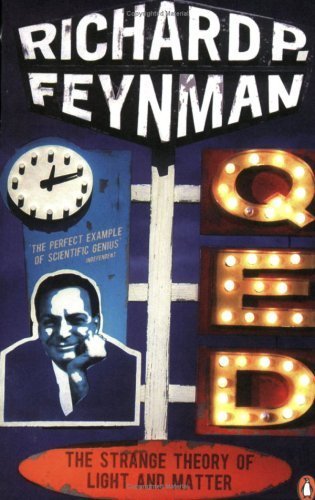
I have no idea if this is old hat to you or not Twistor but this may help:
-

Bribase - Posts: 2671
- Age: 42
Re: Photon propagation in a medium
#4 by twistor59 » Nov 27, 2011 1:44 pm
Actually, I'd completely forgotten about that ! Thanks.
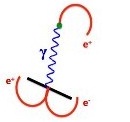
Round about figure 69 he gives the result that the amplitude for transmission through a transparent medium is the "straight through" amplitude plus the amplitudes given that the photon scattered off the various bound electrons present in the medium. The resultant amplitude is what you'd get if you went straight through, but slowed down.
The contributions from scattering off the atomic electrons are computed in that QED paper I linked above.
@Cavarka: opaque materials have the property that the scatterings off the atomic electrons are such that the resultant amplitude (for transmission) is very small, i.e. they add up in the opposite direction to the phase of the incident photon amplitude.
A soul in tension that's learning to fly
Condition grounded but determined to try
Can't keep my eyes from the circling skies
Tongue-tied and twisted just an earthbound misfit, I
Condition grounded but determined to try
Can't keep my eyes from the circling skies
Tongue-tied and twisted just an earthbound misfit, I
-
twistor59 - RS Donator
- THREAD STARTER
- Posts: 4966
Re: Photon propagation in a medium
#5 by zaybu » Nov 27, 2011 2:58 pm
twistor59 wrote:A thread based on a silly crackpot article that I posted in pseudoscience has, through an appalling lack of discipline, degenerated into a discussion of actual science. So, for that reason, I feel bound to move the discussion to here....
The issue is the following: we all know that light propagates in a vacuum at speed c, and "consists" of these mysterious entities called photons. The question is - how does light propagate in a medium ? We know that the speed is lower in the medium, this is because we're dealing with c = 1/sqrt(με) instead of c = 1/sqrt(μ0ε0), but this is just a statement of the classical behaviour. Is there any way to understand this in terms of the fundamental interactions between the photon and the atoms in the medium ?
The propagation can't result from photons being absorbed by atoms and re-emitted, since this would place restrictions on the frequencies involved. (This is discussed here).
Certainly, the medium is more polarizable than the vacuum - it has charge distributions from the electron orbitals which can be polarized by the field of the photon. Maybe that's all that needs to be said, even in the quantum case.
There is some discussion of the QED analysis of propagation in a medium here.
I don't know about the first article. The author makes assertions with no evidence supporting his claim. So I have ignored
it.
In the second article, the propagation of photons is understood to be c. What is discussed is the on-shell energy versus off-shell energy in the photon-atom scattering process. The whole idea that the speed of photon would change is not addressed simply because it is a given that it is c, ( c=1, in the paper). The hint is given in this sentence: "However, all operators commute with each other at space-like separation in quantum field theory, which makes such superluminal amplitude never violate the causality [1, 15]." (page 4). That is also repeated in the conclusion.
-

zaybu - Posts: 391
Re: Photon propagation in a medium
#6 by twistor59 » Nov 27, 2011 3:43 pm
zaybu wrote:twistor59 wrote:A thread based on a silly crackpot article that I posted in pseudoscience has, through an appalling lack of discipline, degenerated into a discussion of actual science. So, for that reason, I feel bound to move the discussion to here....
The issue is the following: we all know that light propagates in a vacuum at speed c, and "consists" of these mysterious entities called photons. The question is - how does light propagate in a medium ? We know that the speed is lower in the medium, this is because we're dealing with c = 1/sqrt(με) instead of c = 1/sqrt(μ0ε0), but this is just a statement of the classical behaviour. Is there any way to understand this in terms of the fundamental interactions between the photon and the atoms in the medium ?
The propagation can't result from photons being absorbed by atoms and re-emitted, since this would place restrictions on the frequencies involved. (This is discussed here).
Certainly, the medium is more polarizable than the vacuum - it has charge distributions from the electron orbitals which can be polarized by the field of the photon. Maybe that's all that needs to be said, even in the quantum case.
There is some discussion of the QED analysis of propagation in a medium here.
I don't know about the first article. The author makes assertions with no evidence supporting his claim. So I have ignored
it.
In the second article, the propagation of photons is understood to be c. What is discussed is the on-shell energy versus off-shell energy in the photon-atom scattering process. The whole idea that the speed of photon would change is not addressed simply because it is a given that it is c, ( c=1, in the paper). The hint is given in this sentence: "However, all operators commute with each other at space-like separation in quantum field theory, which makes such superluminal amplitude never violate the causality [1, 15]." (page 4). That is also repeated in the conclusion.
But the first paragraph of the Zhang paper states:
The propagating behavior of photons in optical media is interesting due to a refracted photon has same energy but different momentum to it has in vacuum. In quantum field theory[1], the two words on-shell and off-shell differentiate whether a particle’s momentum and energy obeying or disobeying the relativistic energy-momentum relation (mass shell). For an on-shell particle, its momentum and energy obeys the relativistic relation H0 = √P2 c2 + m2 c4 . For an off-shell particle, its momentum and energy disobey the relativistic relation, which means H0 ≠√P2 c2 + m2c4. When a photon is propagating in vacuum, it is on-shell due to it obeys the relation hω0 = ℏk0 c. When a photon is propagating in an optical medium, its frequency is same to it has in vacuum, however, its wave vector is changed by the refraction. The Abraham-Minkowski controversy [2–6] is a century-old problem which debates that the momentum of a photon in the optical media is k0 /n (Abraham momentum) or n k0 (Minkowski momentum), where n is the refraction index of the optical media. No matter which momentum is right, the refracted photon seems to be always off-shell in optical media due to hω0 /c ≠n k0and hω0 /c ≠k0 /n
so the speed of the photon that's propagating through the medium is not c. Propagation in a medium seems to force it to be off shell.
A soul in tension that's learning to fly
Condition grounded but determined to try
Can't keep my eyes from the circling skies
Tongue-tied and twisted just an earthbound misfit, I
Condition grounded but determined to try
Can't keep my eyes from the circling skies
Tongue-tied and twisted just an earthbound misfit, I
-
twistor59 - RS Donator
- THREAD STARTER
- Posts: 4966
Re: Photon propagation in a medium
#7 by The_Metatron » Nov 27, 2011 4:10 pm
Doesn't this have to do with the finite but small amount of time the atoms in the medium take to absorb then re-emit the photons?
-

The_Metatron - Moderator
- Name: Jesse
- Posts: 22536
- Age: 61
- Country: United States

Re: Photon propagation in a medium
#8 by twistor59 » Nov 27, 2011 4:18 pm
The_Metatron wrote:Doesn't this have to do with the finite but small amount of time the atoms in the medium take to absorb then re-emit the photons?
No, I don't think they do that. If they did, they'd be emitting a photon whose frequency is determined by the energy difference in the electron levels.
A soul in tension that's learning to fly
Condition grounded but determined to try
Can't keep my eyes from the circling skies
Tongue-tied and twisted just an earthbound misfit, I
Condition grounded but determined to try
Can't keep my eyes from the circling skies
Tongue-tied and twisted just an earthbound misfit, I
-
twistor59 - RS Donator
- THREAD STARTER
- Posts: 4966
Re: Photon propagation in a medium
#9 by zaybu » Nov 27, 2011 5:22 pm
twistor59 wrote:
But the first paragraph of the Zhang paper states:The propagating behavior of photons in optical media is interesting due to a refracted photon has same energy but different momentum to it has in vacuum. In quantum field theory[1], the two words on-shell and off-shell differentiate whether a particle’s momentum and energy obeying or disobeying the relativistic energy-momentum relation (mass shell). For an on-shell particle, its momentum and energy obeys the relativistic relation H0 = √P2 c2 + m2 c4 . For an off-shell particle, its momentum and energy disobey the relativistic relation, which means H0 ≠√P2 c2 + m2c4. When a photon is propagating in vacuum, it is on-shell due to it obeys the relation hω0 = ℏk0 c. When a photon is propagating in an optical medium, its frequency is same to it has in vacuum, however, its wave vector is changed by the refraction. The Abraham-Minkowski controversy [2–6] is a century-old problem which debates that the momentum of a photon in the optical media is k0 /n (Abraham momentum) or n k0 (Minkowski momentum), where n is the refraction index of the optical media. No matter which momentum is right, the refracted photon seems to be always off-shell in optical media due to hω0 /c ≠n k0and hω0 /c ≠k0 /n
so the speed of the photon that's propagating through the medium is not c. Propagation in a medium seems to force it to be off shell.
Off-shell means that E2 ≠ p2c2 + m2c4. It's an indication that you are dealing with inelastic scattering and has nothing to do with the speed of the photon varying. The article goes on how this inelastic scattering is tied in with bound states and off-shell amplitudes in Feynman propagators. In one instance, it considers: "In the U-channel, the bound electron emits a photon at x1 and absorbs a photon at x2 with x2 > x1." That is in fact, we are looking at photons being absorbed and emitted (See fig. 2), which is what I have said in the other thread.
-
zaybu - Posts: 391
Re: Photon propagation in a medium
#10 by twistor59 » Nov 27, 2011 5:53 pm
zaybu wrote:twistor59 wrote:
But the first paragraph of the Zhang paper states:The propagating behavior of photons in optical media is interesting due to a refracted photon has same energy but different momentum to it has in vacuum. In quantum field theory[1], the two words on-shell and off-shell differentiate whether a particle’s momentum and energy obeying or disobeying the relativistic energy-momentum relation (mass shell). For an on-shell particle, its momentum and energy obeys the relativistic relation H0 = √P2 c2 + m2 c4 . For an off-shell particle, its momentum and energy disobey the relativistic relation, which means H0 ≠√P2 c2 + m2c4. When a photon is propagating in vacuum, it is on-shell due to it obeys the relation hω0 = ℏk0 c. When a photon is propagating in an optical medium, its frequency is same to it has in vacuum, however, its wave vector is changed by the refraction. The Abraham-Minkowski controversy [2–6] is a century-old problem which debates that the momentum of a photon in the optical media is k0 /n (Abraham momentum) or n k0 (Minkowski momentum), where n is the refraction index of the optical media. No matter which momentum is right, the refracted photon seems to be always off-shell in optical media due to hω0 /c ≠n k0and hω0 /c ≠k0 /n
so the speed of the photon that's propagating through the medium is not c. Propagation in a medium seems to force it to be off shell.
Off-shell means that E2 ≠ p2c2 + m2c4.
Precisely, because it's off-shell, it will have a velocity not equal to c, the velocity in vacuo. The 4 momentum they're talking about here is the 4 momentum of the photon that's entered the medium and being propagated in it.
zaybu wrote:
It's an indication that you are dealing with inelastic scattering and has nothing to do with the speed of the photon varying. The article goes on how this inelastic scattering is tied in with bound states and off-shell amplitudes in Feynman propagators. In one instance, it considers: "In the U-channel, the bound electron emits a photon at x1 and absorbs a photon at x2 with x2 > x1." That is in fact, we are looking at photons being absorbed and emitted (See fig. 2), which is what I have said in the other thread.
So, the scattering they're talking about here is the sum of all the perturbative contributions to the photon's propagation. These are virtual processes - they don't actually happen. If a photon were really absorbed, it would raise the energy level of an atom. We're just adding up their contributions to the final amplitude. When they're summed, the result is that the real transmitted photon propagates, in the medium, with a speed not equal to c.
A soul in tension that's learning to fly
Condition grounded but determined to try
Can't keep my eyes from the circling skies
Tongue-tied and twisted just an earthbound misfit, I
Condition grounded but determined to try
Can't keep my eyes from the circling skies
Tongue-tied and twisted just an earthbound misfit, I
-
twistor59 - RS Donator
- THREAD STARTER
- Posts: 4966
Re: Photon propagation in a medium
#11 by cavarka9 » Nov 27, 2011 6:05 pm
Nice
Which brings me to the question, how much amount of energy is absorbed by transparent objects. Must not be much(atleast in visible range) if it has to be transparent right?.
I will now always look at glass with admiration.
Then the whole optical properties of materials, refractive index of elements are infact due to perturbative contributions?.
No, I don't think they do that. If they did, they'd be emitting a photon whose frequency is determined by the energy difference in the electron levels.
Which brings me to the question, how much amount of energy is absorbed by transparent objects. Must not be much(atleast in visible range) if it has to be transparent right?.
I will now always look at glass with admiration.
Then the whole optical properties of materials, refractive index of elements are infact due to perturbative contributions?.
Every moment is a choice.Choices you make now determine your destiny.free yourself of old choices made. Success is a journey,not a destination.
-
cavarka9 - Name: prajna
- Posts: 3256
- Country: 21.0000° N, 78.0000° E
Re: Photon propagation in a medium
#12 by twistor59 » Nov 27, 2011 7:39 pm
cavarka9 wrote:Nice
No, I don't think they do that. If they did, they'd be emitting a photon whose frequency is determined by the energy difference in the electron levels.
Which brings me to the question, how much amount of energy is absorbed by transparent objects. Must not be much(atleast in visible range) if it has to be transparent right?.
I will now always look at glass with admiration.
Then the whole optical properties of materials, refractive index of elements are infact due to perturbative contributions?.
Yes, very little visible light is absorbed - I vaguely remember that infrared gets absorbed more (?) Unfortunately I never studied condensed matter physics, so I don't have much knowledge of these mechanisms.
A soul in tension that's learning to fly
Condition grounded but determined to try
Can't keep my eyes from the circling skies
Tongue-tied and twisted just an earthbound misfit, I
Condition grounded but determined to try
Can't keep my eyes from the circling skies
Tongue-tied and twisted just an earthbound misfit, I
-
twistor59 - RS Donator
- THREAD STARTER
- Posts: 4966
Re: Photon propagation in a medium
#13 by campermon » Nov 27, 2011 7:41 pm
I can't see any mention of god/pixies in these explanations.

Scarlett and Ironclad wrote:Campermon,...a middle aged, middle class, Guardian reading, dad of four, knackered hippy, woolly jumper wearing wino and science teacher.
-

campermon - RS Donator
- Posts: 17444
- Age: 54
Re: Photon propagation in a medium
#14 by epepke » Nov 27, 2011 7:53 pm
twistor59 wrote:Yes, very little visible light is absorbed - I vaguely remember that infrared gets absorbed more (?) Unfortunately I never studied condensed matter physics, so I don't have much knowledge of these mechanisms.
It depends on the medium. Salt, (sodium chloride) is transparent to infrared.
-

epepke - Posts: 4080
- Country: US
Re: Photon propagation in a medium
#15 by zaybu » Nov 27, 2011 8:29 pm
itwistor59 wrote:
So, the scattering they're talking about here is the sum of all the perturbative contributions to the photon's propagation. These are virtual processes - they don't actually happen. If a photon were really absorbed, it would raise the energy level of an atom. We're just adding up their contributions to the final amplitude. When they're summed, the result is that the real transmitted photon propagates, in the medium, with a speed not equal to c.
That the speed of light in a material is not c is a classical result. But it's not because the photons have slowed down, but as the paper indicates, it can be explained using QED on emission and absorption, and the paper indicates how this is to be done:
We use the S-matrix formalism of bound-state QED to study the photon-atom scattering and give the off-shell propagating behavior of photons in atoms during the scattering. By considering the spontaneous emission of excited states
of bound electrons, we find that only the bound electrons in ground states are suitable to be the initial and final state ofS-matrix. Typical light-atoms scattering processes including Rayleigh scattering, Compton scattering, Raman scattering,
as well as the cycle of absorbing and emitting photons by atoms are all corresponding to certain Feynman diagrams in
the perturbation theory of bound-state QED. The inner bound electron lines in such Feynman diagrams are described by the
Feynman propagators,which can give the off-shell amplitudes of photons in atoms phenomenally.
"off-shell amplitudes of photons" is not about velocity but related to calculating probabilities.
No where in the paper is there any implication that the speed of light has been changed. If it does, I'd like to know which equation says that.
-
zaybu - Posts: 391
Re: Photon propagation in a medium
#16 by twistor59 » Nov 28, 2011 9:14 am
zaybu wrote:itwistor59 wrote:
So, the scattering they're talking about here is the sum of all the perturbative contributions to the photon's propagation. These are virtual processes - they don't actually happen. If a photon were really absorbed, it would raise the energy level of an atom. We're just adding up their contributions to the final amplitude. When they're summed, the result is that the real transmitted photon propagates, in the medium, with a speed not equal to c.
That the speed of light in a material is not c is a classical result. But it's not because the photons have slowed down, but as the paper indicates, it can be explained using QED on emission and absorption, and the paper indicates how this is to be done:We use the S-matrix formalism of bound-state QED to study the photon-atom scattering and give the off-shell propagating behavior of photons in atoms during the scattering. By considering the spontaneous emission of excited states
of bound electrons, we find that only the bound electrons in ground states are suitable to be the initial and final state ofS-matrix. Typical light-atoms scattering processes including Rayleigh scattering, Compton scattering, Raman scattering,
as well as the cycle of absorbing and emitting photons by atoms are all corresponding to certain Feynman diagrams in
the perturbation theory of bound-state QED. The inner bound electron lines in such Feynman diagrams are described by the
Feynman propagators,which can give the off-shell amplitudes of photons in atoms phenomenally.
"off-shell amplitudes of photons" is not about velocity but related to calculating probabilities.
No where in the paper is there any implication that the speed of light has been changed. If it does, I'd like to know which equation says that.
Let's try to be explicit:
I have a source. One of those fancy single photon at-a-time sources, so that we're clear we're talking about photons, not classical light. This is one of those "photons on demand" sources, so I know the origination time of the photon. Since this is a thought experiment, I have some way of knowing it exactly.
I aim (somehow) the photons into a transparent medium - clear glass. At the other side of the glass I have a photon detector. I can then work out the propagation time for each photon from source to detector.
I claim that what you would find is a distribution of transfer times, with a mean less than c. This distribution could be obtained by summing over the processes that could happen to the photon en route. Scattering off bound electrons, emission, absorption etc. (These are the amplitudes the paper is calculating). This is just the usual process in QED - add up the amplitudes for all the ways the process could occur. These, of course, are virtual processes - we can't say that any of them really happen, just that the sum of their amplitudes gives the overall amplitude for the propagation through the medium.
You could then, in principle, compute a modified propagator - an amplitude for propagation through glass. In this propagator, the photon would have a mass. It would be off-shell.
A soul in tension that's learning to fly
Condition grounded but determined to try
Can't keep my eyes from the circling skies
Tongue-tied and twisted just an earthbound misfit, I
Condition grounded but determined to try
Can't keep my eyes from the circling skies
Tongue-tied and twisted just an earthbound misfit, I
-
twistor59 - RS Donator
- THREAD STARTER
- Posts: 4966
Re: Photon propagation in a medium
#17 by zaybu » Nov 28, 2011 11:48 am
twistor59 wrote:
You could then, in principle, compute a modified propagator - an amplitude for propagation through glass. In this propagator, the photon would have a mass. It would be off-shell.
I agree with most of your post except for the last paragraph. The paper you cited never makes allusion that photons have mass. Just to clear that up.
From relativity:
(1) E2 = p2c2 + m2c4.
For photon, m=0
(2) E2 = p2c2 or E =pc
(3) the momentum, p = E/c
From quantum mechanics:
(4) E = hν or E= ℏω
Combining (3) and (4)
(5) p= ℏω/c = ℏk
Classically, you have the index of refraction (n) that comes into play. There was a controversy in regard to the momentum of the photon as to whether:
(6) p = ℏk/n (Abraham)
OR
(7) p = n ℏk ( Minkowski)
That would make the photon to be off-shell. Note: this is about energy ( E = pc), not velocity nor mass.
The paper does not resolve this controversy but shows that one can use QED, and considering that the electron is bounded to atoms then one can replace those electron internal states (equation 3) with the ground states of the atoms (equation 9). We then get the standard calculation using Wick's theorem (equation 10), and Feynman's propagator (equation 17), always showing that causality is never violated. In section IV, they show that this method is also equivalent to the method using the electric dipole approximation. Nowhere does the paper ever claim that the speed of the photon changes, in fact c = 1 throughout the paper, and nowhere does the paper claim that photons acquire mass (m = 0).
-
zaybu - Posts: 391
Re: Photon propagation in a medium
#18 by twistor59 » Nov 28, 2011 12:54 pm
But, if you read the paragraph carefully:
It is an effective propagator designed to compute the amplitude PhotonIntoMedium -> PhotonOutOfMedium
As strict Copenhagenists, the nature and behaviour of the photon while in the medium, we can't determine, all we can do is add up all the possibilities according to the rules. This will result in a propagation amplitude which will be:
small in magnitude for opaque media
large in magnitude for transparent media
have a phase behaviour which is the same as you'd get by giving the photon a mass whilst it was in the medium
You could then, in principle, compute a modified propagator - an amplitude for propagation through glass. In this propagator, the photon would have a mass. It would be off-shell.
It is an effective propagator designed to compute the amplitude PhotonIntoMedium -> PhotonOutOfMedium
As strict Copenhagenists, the nature and behaviour of the photon while in the medium, we can't determine, all we can do is add up all the possibilities according to the rules. This will result in a propagation amplitude which will be:
small in magnitude for opaque media
large in magnitude for transparent media
have a phase behaviour which is the same as you'd get by giving the photon a mass whilst it was in the medium
A soul in tension that's learning to fly
Condition grounded but determined to try
Can't keep my eyes from the circling skies
Tongue-tied and twisted just an earthbound misfit, I
Condition grounded but determined to try
Can't keep my eyes from the circling skies
Tongue-tied and twisted just an earthbound misfit, I
-
twistor59 - RS Donator
- THREAD STARTER
- Posts: 4966
Re: Photon propagation in a medium
#19 by zaybu » Nov 28, 2011 1:38 pm
twistor59 wrote:
But, if you read the paragraph carefully:You could then, in principle, compute a modified propagator - an amplitude for propagation through glass. In this propagator, the photon would have a mass. It would be off-shell.
Are we talking about the same paper, the Zhang paper at http://arxiv.org/PS_cache/arxiv/pdf/110 ... 5783v3.pdf , ???
If we are, I can't find that sentence, "In this propagator, the photon would have a mass." Could you direct me to the page and paragraph? ( I did a search with MS-word, and that sentence is not in that paper.)
As that paper maintains, off-shell is from the controversy that p = ℏk/n (Abraham) OR p = n ℏk (Minkowski). It has nothing to do with the speed of a photon, it doesn't slow down, or its mass, it doesn't acquire any mass.
twistor59 wrote:
small in magnitude for opaque media
large in magnitude for transparent media
have a phase behaviour which is the same as you'd get by giving the photon a mass whilst it was in the medium
Never heard of such explanation and I don't think it's right. It's just based on your speculation.
-
zaybu - Posts: 391
Re: Photon propagation in a medium
#20 by Clive Durdle » Nov 28, 2011 3:13 pm
Umm, I thought light was propagating through a medium in space - space-time, and what of all those quantum fluctuations that are bashing those poor photons continually?
"We cannot slaughter each other out of the human impasse"
- Clive Durdle
- Name: Clive Durdle
- Posts: 4874
- Country: UK
29 posts
• Page 1 of 2 • 1, 2
Who is online
Users viewing this topic: No registered users and 1 guest